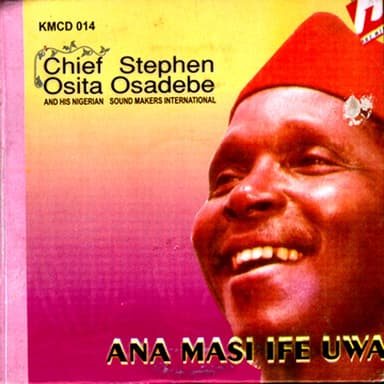
Ana M'eme
Chief Stephen Osita Osadebe
There is a melancholy woven into the groove of this piece that makes it unusual within Osadebe's catalog — the guitars carry a slightly minor-inflected quality, and the percussion sits lower in the mix than usual, creating a sense of introspection beneath what is still unmistakably a highlife rhythm. "Ana M'eme" translates roughly to "it is happening to me," and the song lives inside that first-person reckoning, exploring the experience of difficulty, displacement, or personal hardship without collapsing into lamentation. Osadebe's voice is restrained here, almost meditative — he sings with the careful weight of someone choosing each word with full knowledge of its cost. The brass enters sparingly, providing moments of lift that feel earned rather than ornamental. What makes this recording particularly affecting is the tension it maintains between rhythmic buoyancy and lyrical gravity — the music insists on continuing, on moving forward, even as the subject matter acknowledges real pain. This duality is central to the highlife tradition itself, a music born partly from the need to metabolize difficulty through collective sound. The song would reach someone in a quiet, private moment — late at night, alone with something unresolved — offering not answers but the comfort of feeling less singular in one's struggles. As a cultural document, it reveals the philosophical depth Osadebe brought to a genre sometimes reduced to pure celebration.
slow
1970s
muted, introspective, earthy
Igbo, southeastern Nigeria
Highlife, World Music. Igbo Highlife.
melancholic, resilient. Carries difficulty and personal hardship throughout without collapsing into lamentation, held in tension by a rhythm that insists on continuing forward..
energy 4. slow. danceability 4. valence 5.
vocals: restrained male, meditative, each phrase chosen with weight and care.
production: minor-inflected guitars, low-mixed percussion, sparse brass for earned moments of lift.
texture: muted, introspective, earthy. acousticness 6.
era: 1970s. Igbo, southeastern Nigeria.
Late at night, alone with something unresolved, needing the comfort of feeling less singular in one's struggles.