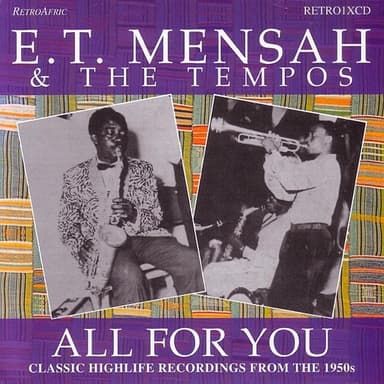
All For You
E.T. Mensah
The horns enter on an exhale — there is a generosity to how Mensah and the Tempos open this piece, a giving quality that sets the emotional temperature immediately. The arrangement is lush without being cluttered, each instrument occupying its own frequency band with the kind of discipline that comes from years of live performance as an ensemble rather than studio assembly. The guitar comping sits back slightly in the mix, letting the brass carry the melodic weight while the percussion — light-handed, conversational — keeps the whole structure floating. Mensah's vocal here is particularly warm, the phrasing unhurried, each line delivered as if offered rather than projected. The song is a declaration of devotion, but not the breathless kind — it's the devotion of someone who has thought carefully and means what they say, the lyric circling around commitment as a chosen, renewable act rather than a singular moment of feeling. This is highlife as emotional architecture, using the music's inherent sociability to carry a deeply personal message. It belongs to the golden era of Ghanaian popular music, a time when the genre was the lingua franca of West African urban sophistication and a symbol of newly imagined nationhood. You reach for this when you want to give someone a gift they can hear — when celebration needs to sound both festive and sincere, when the occasion calls for music that knows the difference between happiness and joy.
medium
1950s
lush, warm, polished
Ghanaian, West African urban, nationhood era
Highlife, World Music. Ghanaian Dance Band Highlife.
romantic, warm. Opens with generous softness and builds gradually into a sustained, chosen devotion that feels sincere rather than impulsive..
energy 6. medium. danceability 7. valence 9.
vocals: warm male, unhurried, sincere, offering rather than projecting.
production: lush brass arrangement, recessed guitar comping, light conversational percussion, ensemble balance.
texture: lush, warm, polished. acousticness 3.
era: 1950s. Ghanaian, West African urban, nationhood era.
celebratory gatherings where the occasion calls for music that knows the difference between happiness and joy and chooses both