Ne Me Na
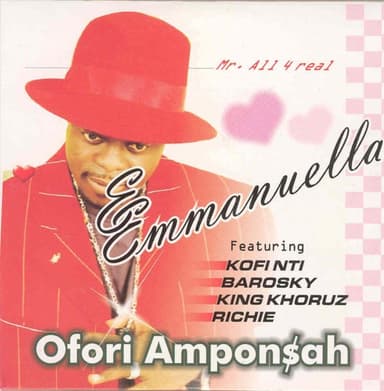
Ofori Amponsah
The mood here is tender and slightly melancholic, carried by an acoustic guitar line that circles back on itself like a thought you can't quite let go. The tempo is moderate — not a slow ballad exactly, but nothing that rushes. There's a lightness to the production, a sparseness that gives the vocals room to settle. Ofori Amponsah sings in Twi with a pleading quality that doesn't tip into desperation — it reads more like dignified longing, someone asking for presence rather than demanding it. The emotional arc moves from uncertainty toward something approaching hope, though it never fully resolves into brightness. Layered guitar textures fill the mid-range while the low end stays restrained, making the song feel intimate rather than grand. This is the kind of highlife that belongs to the quieter, more personal register of the genre — less about celebration and more about confession. Contextually, it reflects Ofori Amponsah's ability to draw from both the Ghanaian popular tradition and softer West African love-song sensibilities. You play this late at night, alone, when the distance between yourself and someone you care about feels particularly real.
medium
2000s
sparse, intimate, soft
Ghanaian highlife, West African love-song tradition
Highlife, Afrobeats. Ghanaian Highlife.
melancholic, longing. Moves from quiet uncertainty and dignified pleading toward a tentative, unresolved hope that never fully brightens..
energy 3. medium. danceability 4. valence 5.
vocals: pleading male tenor, dignified, Twi-language delivery, warm.
production: acoustic guitar, sparse, restrained low end, intimate.
texture: sparse, intimate, soft. acousticness 8.
era: 2000s. Ghanaian highlife, West African love-song tradition.
Late at night, alone, when the distance between yourself and someone you care about feels particularly real.