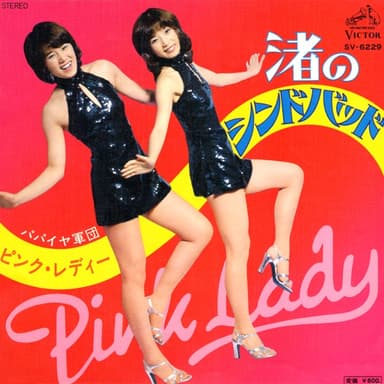
渚のシンドバッド
Pink Lady
Released the same year as "UFO" and nearly as successful, this Pink Lady recording draws on entirely different sonic references — the title reaches back to Scheherazade, to maritime adventure mythology, to the exotic-romantic tradition of Japanese pop that had been stretching from the postwar era through the 70s. The production has the particular shimmer of late-70s Japanese commercial pop at its most accomplished: strings that know when to surge and when to recede, a rhythm section that borrows from the same disco playbook as their other hits but with slightly more theatrical ambition, and the two voices moving in their characteristic lockstep harmony. The choreography mythology around this song is particularly vivid — the undulating arm movements, the synchronized footwork — and the recording itself carries that physicality in its rhythm track, the mix seemingly designed with bodies in motion in mind. There is something genuinely exotic in the production's textures, a willingness to layer sounds that suggest multiple cultural origins without specifically claiming any, which gave the song a quality of transported pleasure that matched its lyrical subject matter.
fast
1970s
shimmering, lush, physical
Japan
J-Pop, Disco. Japanese theatrical idol pop.
exotic, festive. Carries a consistent sense of transported pleasure and theatrical adventure — the maritime-exotic metaphor sustains throughout without darkening..
energy 8. fast. danceability 8. valence 8.
vocals: synchronized duo, theatrical, energetic, lockstep harmony, performance-calibrated.
production: surging strings, disco rhythm, layered multicultural textures, late-70s commercial peak.
texture: shimmering, lush, physical. acousticness 2.
era: 1970s. Japan.
Best heard when you want to dance and feel like you've been transported somewhere far and warm.