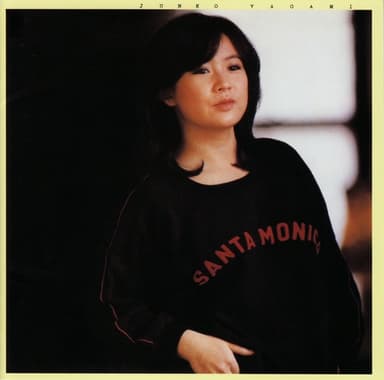
みずいろの雨
Junko Yagami
Junko Yagami's "みずいろの雨" — "Light Blue Rain" — arrives in 1978 as a perfect distillation of late-seventies Japanese pop sophistication: pristine production, a melody that seems to flow rather than proceed, and a vocal performance of quiet technical mastery. The arrangement balances strings with electric piano in a way that feels more European than American, the orchestration carrying a chamber-music delicacy without sacrificing commercial warmth. Yagami's voice is controlled and luminous — she sings within a relatively narrow emotional register but makes that range feel sufficient, even vast. The "light blue rain" of the title functions as both meteorological specificity and emotional coloring: a rain that is not dramatic or violent but persistent, cooling, slightly melancholic. The lyric describes romantic uncertainty — waiting, wondering, reading someone's feelings through indirect signals — in language that is wistful rather than wounded. This is city pop before the term fully existed, a music designed for interior spaces: apartments, cars, the transitional moments between one part of life and another. Decades later it was rediscovered by international listeners via YouTube algorithms and lo-fi playlists, proving that its emotional frequency transcends both era and language.
slow
1970s
pristine, delicate, interior
Japan
J-Pop, City Pop. Late-70s Japanese pop / pre-city pop.
wistful, romantic. Flows gently from uncertainty and waiting through quiet emotional color, never resolving but sustaining a luminous, open longing..
energy 3. slow. danceability 3. valence 5.
vocals: controlled, luminous, technically precise, quiet mastery, emotionally restrained.
production: strings, electric piano, chamber-delicate orchestration, European influence, pristine mix.
texture: pristine, delicate, interior. acousticness 4.
era: 1970s. Japan.
Best heard in an apartment or car during a quiet transitional moment between one part of the day and another.