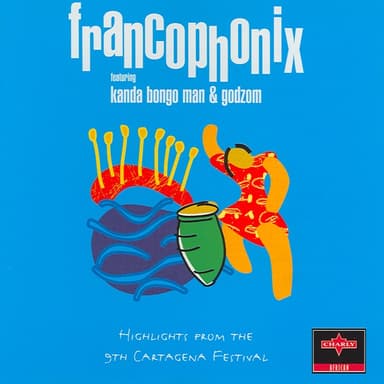
Kwassa Kwassa
Kanda Bongo Man
Kanda Bongo Man's "Kwassa Kwassa" is not merely a song but a cultural object of considerable historical weight — it named and codified a dance style, sent that style across the world, and became, through referencing in Paul Simon's famous lyric, a metonym for African popular music in international consciousness. The production carries the Congolese soukous sound in its purest export form: the guitars are elevated, crystalline, the bass prominent but light on its feet, the drums stripped to essential patterns, and the overall effect is of music that has identified the elements most likely to translate across cultural distances and foregrounded exactly those. Kanda Bongo Man's vocal style is less elaborate than the Wenge Musica generation — more conversational, the phrasing relaxed, the virtuosity expressed through simplicity rather than ornament. The dance the song describes and prescribes — hips forward, fluid, continuous — is embedded in the rhythm itself, the cavacha pattern encoding the movement instructions the lyrics articulate. This is music that created an international image of Congolese sound in the 1980s, and whatever simplifications that image involved, the song itself remains an impeccable artifact of what soukous does when it operates at its most focused and essential.
fast
1980s
clean, light, crystalline
Democratic Republic of Congo
Soukous, Congolese Rumba. Export Soukous.
joyful, iconic. Opens crystalline and essential, sustaining an ideal groove that encodes both the dance and the cultural moment simultaneously..
energy 8. fast. danceability 10. valence 9.
vocals: relaxed, conversational, light, unhurried, accessible.
production: elevated crystalline guitars, light bass, stripped drums, export-optimized arrangement.
texture: clean, light, crystalline. acousticness 2.
era: 1980s. Democratic Republic of Congo.
The ideal introduction to soukous for any listener; equally at home at international world music venues or Kinshasa dance halls.