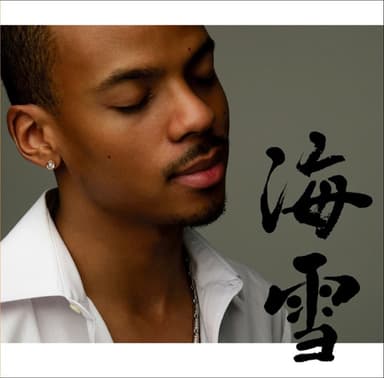
海雪 (Umiyuki)
Jero
Jero's voice carries an almost impossible contradiction — a young Black American man from Pittsburgh singing enka with a baritone richness that would shame veterans of the genre. "Umiyuki" dresses this voice in a shimmering production that balances traditional shamisen textures against gently swelling strings, while synthesized sea-breeze sounds drift beneath the melody like actual spray off the Tsugaru Strait. The emotional core is grief worn quietly — a lover lost to distance or perhaps death, remembered through the image of snow falling on water, that fleeting moment when solid and liquid and air dissolve into each other. Jero's phrasing honors enka's signature kobushi ornamentation without pastiche; he bends into notes with a soulfulness that feels earned rather than borrowed. The lyrics speak in the idiom of old Japan — sea, separation, snow as metaphor for the ephemeral — yet land with fresh weight in his delivery. This is music for the hour after a ferry terminal farewell, watching a shape disappear into grey horizon. Its power lies in the sincerity behind the cultural translation: no irony, no novelty act, just a man singing from somewhere genuine about something irretrievably gone.
slow
2000s
shimmering, mournful, delicate
Japan
Enka. Traditional Enka.
melancholic, wistful. Opens in quiet grief and sustains it through the end, the sorrow deepening as snow-on-sea imagery accumulates without resolution..
energy 3. slow. danceability 2. valence 2.
vocals: rich baritone, kobushi ornamentation, soulful bending, sincere delivery.
production: shamisen, orchestral strings, synthesized ambient textures, traditional arrangement.
texture: shimmering, mournful, delicate. acousticness 6.
era: 2000s. Japan.
Best heard alone at dusk near water, sitting with an unresolved farewell.