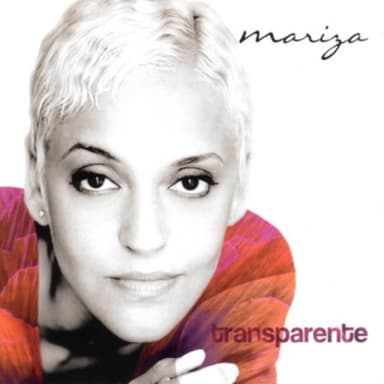
Meu Fado Meu
Mariza
Mariza's "Meu Fado Meu" announces itself as a manifesto before a single lyric lands. The Portuguese guitar opens with crystalline authority, each note ringing like a declaration, while the viola baixo holds the harmonic ground beneath it like bedrock. Mariza's voice enters with a quality unlike any other fadista — warm in its lower registers yet capable of sudden, soaring brilliance at the upper edge, a sound that seems to originate somewhere between the chest and the soul. The song is a declaration of ownership: this fate, this music, belongs to her. She did not choose fado — fado chose her, and she has surrendered to it completely. The lyrics frame fado not as melancholy but as identity, as blood, as the only true autobiography available to a person born into its tradition. Mariza recorded this with an almost defiant joy, a quality that separates her from the more austere strain of Lisbon fado. The production is clean and centered, the instrumentation minimal enough to let her voice command every acoustic centimeter of space. Listen to this in a dimly lit room, or on a long evening commute when you need to feel that your own emotional weight is a dignified thing to carry. It sounds like someone planting a flag in their own name.
medium
2000s
clear, authoritative, luminous
Portugal
Fado. Fado contemporâneo / manifesto fado.
defiant, joyful. Opens with crystalline declaration and builds through surrender into defiant joy, presenting fate not as burden but as identity claimed with pride..
energy 6. medium. danceability 3. valence 7.
vocals: commanding mezzo, soaring, defiant, brilliant, front-and-center.
production: Portuguese guitar, viola baixo, minimal, voice-centered.
texture: clear, authoritative, luminous. acousticness 8.
era: 2000s. Portugal.
For dimly lit evenings when you need to feel that your own emotional weight is a dignified thing to carry.