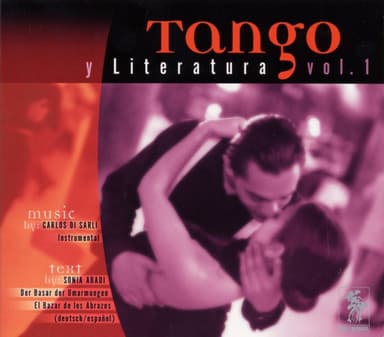
El Jagüel
Carlos Di Sarli
Di Sarli's El Jagüel is water and silence — a jagüel is a watering hole on the Argentine pampa, and the music captures something of that still, reflective quality. Di Sarli's orchestra was always notable for its elegance, the strings carrying most of the melodic weight with a smoothness that other orchestras never quite replicated. Here the effect is of looking at still water: the surface untroubled, the depth implied rather than demonstrated. The bandoneons enter with a gentleness unusual for the instrument — no sharp edges, no dramatic declarations, just a soft unfolding of melody that could go on indefinitely without feeling repetitive. The piano (Di Sarli himself) provides harmonic clarity without interrupting the smooth textural surface. There is something almost impressionistic about the piece — it creates a sensory atmosphere rather than narrating an event, inviting the listener to inhabit a particular quality of light and air rather than follow a story. For dancers Di Sarli is beloved for this quality: the music provides everything needed for movement without dictating its character, leaving space for interpretation that other more assertive orchestras close off. Culturally El Jagüel connects tango to the Argentine interior, reminding listeners that the music did not emerge fully formed from the city but carries rural memory in its structure.
slow
1940s
smooth, still, luminous
Argentina
Tango. Elegant Golden Age Tango.
reflective, serene. Holds a still, contemplative atmosphere throughout with no dramatic peaks, ending as quietly as it begins.
energy 2. slow. danceability 5. valence 4.
production: strings, bandoneons, piano, impressionistic texture.
texture: smooth, still, luminous. acousticness 8.
era: 1940s. Argentina.
Standing beside a body of still water at dusk with nowhere to be.