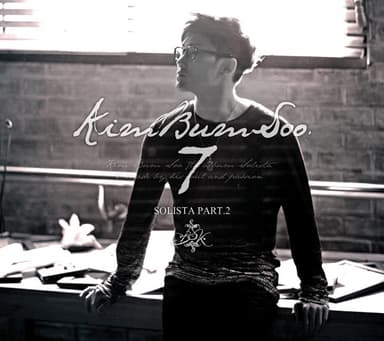
사랑이라 할 수 없어
김범수
"사랑이라 할 수 없어" operates in the more psychologically complex register of feelings that resist easy categorization — this cannot be called love, the title insists, but what then is it? The production reflects the ambiguity, with an arrangement that moves between tender and unsettled, between warmth and something slightly harder to name. Kim Bum-soo's voice navigates this uncertainty with the precision of someone who has thought carefully about the difference between loving someone and being in love with them, between attachment and desire, between comfort and passion. The melodic lines have a searching quality, as if the song itself is feeling its way toward a conclusion it never quite reaches. This emotional territory — the relationship that means too much to dismiss and too little to claim — is familiar to anyone who has spent time in the liminal space between friendship and romance, between past and present, between staying and leaving. Korean ballad culture is particularly interested in these in-between states, perhaps because the social structures governing relationships are specific enough that transgression has real stakes. The song earns its ambivalence honestly, refusing easy resolution. Best encountered in the exact emotional situation it describes: with someone whose meaning in your life you have not yet been able to accurately name.
slow
2000s
unsettled, warm, searching
South Korea
K-Ballad. Introspective ballad.
Ambivalent, Longing. Moves between tenderness and unease without resolution, exploring feeling that resists easy naming and arrives honestly at ambiguity.
energy 3. slow. danceability 2. valence 4.
vocals: nuanced tenor, searching delivery, psychologically precise, quietly restrained.
production: piano, soft strings, understated arrangement, intimate space.
texture: unsettled, warm, searching. acousticness 7.
era: 2000s. South Korea.
Best heard with someone whose meaning in your life you haven't yet been able to accurately name.