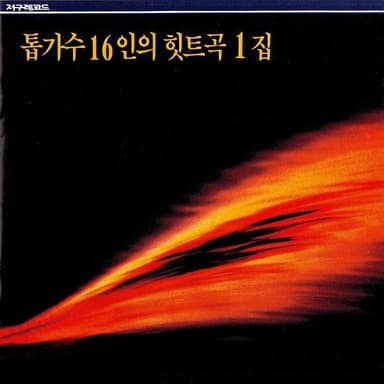
떠나가는 배
정태춘
정태춘 occupies a specific position in Korean music history — a folk singer who came to prominence in the late 1970s and whose music consistently carried political and philosophical weight beneath its poetic surfaces. "떠나가는 배" — the departing ship — uses the vessel as figure for something leaving beyond recall: a person, a time, a version of the self. The arrangement is in the Korean folk tradition: acoustic guitar, minimal ornamentation, a voice that values authenticity over polish. His singing has a roughness that feels intentional, resistance to the smoothness that commercial production demands, an insistence that the words matter more than the performance of them. The lyric watches departure — passively, from shore, without the power to reverse it. There's political resonance available here (the years of protest and silence that shaped his generation) but the image is capacious enough to hold personal loss as well. A ship leaving carries everything: the person aboard, the life they're going toward, the one they're leaving behind. The harbor receding is grief made visible. In terms of listening context, this song asks for stillness and attention — it doesn't submit to background use. It wants to be the thing in the room, carrying its weight fully, the way its maker intended.
slow
1970s
raw, sparse, heavy
South Korea
Folk, Korean Folk. Korean protest folk.
melancholic, contemplative. Begins in still observation of a departure, deepens into the irreversibility of loss, and rests in powerless witness from shore.
energy 2. slow. danceability 1. valence 2.
vocals: rough, authentic, earnest, unpolished, introspective.
production: acoustic guitar, minimal, raw, unadorned.
texture: raw, sparse, heavy. acousticness 9.
era: 1970s. South Korea.
Solitary listening when processing an irreversible loss or departure that cannot be undone.