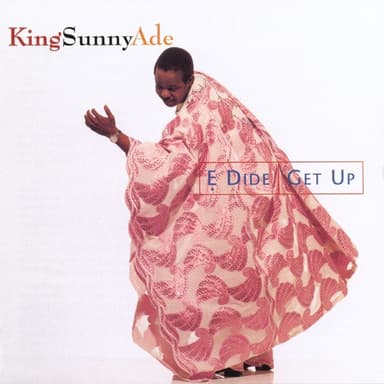
La La La
King Sunny Adé
There is a lightness to "La La La" that distinguishes it from King Sunny Adé's more ceremonially weighted recordings — the vocal hook lands with an almost childlike openness, a sound that crosses every language barrier built into the ears. The jùjú machinery still operates in full — talking drums, layered percussion, steel guitar tracing its bends — but here everything feels airborne, the groove weighted just enough to keep dancing grounded without pulling it earthward. Adé understood early that repetition in African music functions differently than in Western pop: where Western repetition can feel mechanical, here it accumulates spiritual charge, each cycle of "la la la" becoming slightly more luminous than the last. The track functions as both a crowd-pleaser and a genuine artistic statement about the universal reach of vocalization beyond semantic content — sound as pure communication. It translates across generations, playing equally well for grandparents who danced to it live in the 1980s and for younger listeners discovering jùjú for the first time through streaming playlists built around good vibes and warm production.
medium
1980s
luminous, accumulating, celebratory
Nigeria, Yoruba, West Africa
Jùjú, World Music. Classic Jùjú.
Joyful, Uplifting. Begins with childlike openness and accumulates spiritual charge through repetition, each cycle becoming more luminous than the last.
energy 5. medium. danceability 7. valence 9.
vocals: open, universal, celebratory, cross-cultural.
production: warm, airborne, talking drums prominent, steel guitar accents.
texture: luminous, accumulating, celebratory. acousticness 5.
era: 1980s. Nigeria, Yoruba, West Africa.
Accessible jùjú entry point for newcomers seeking warmth and universal groove across generational lines.