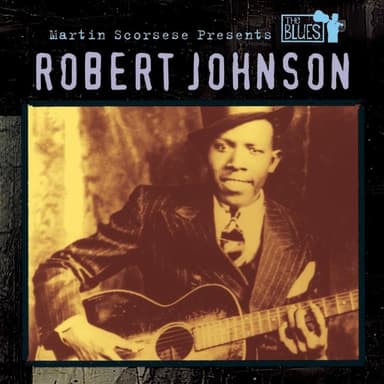
Cross Road Blues
Robert Johnson
The opening guitar notes arrive like a question asked in an empty road — two strings, a bend, a pause, and then the whole lonely machinery starts turning. Robert Johnson's voice enters at a register that feels almost conversational but carries an undertow of genuine dread, as if he is reporting something he has actually witnessed. The crossroads mythology surrounding this recording has become so large it threatens to swallow the song itself, but strip that away and what remains is still remarkable: a blues that captures the specific anxiety of being at a decision point with no good options visible. The guitar work is extraordinary not because it's technically flashy but because it sounds like two people playing — a rhythm and a lead voice simultaneously — the result of Johnson's unique thumb-and-finger technique creating a self-contained musical ecosystem. The tempo has a slightly rushed quality, like someone walking faster than they intend to, checking over their shoulder. This belongs to American mythology as surely as any literary work — a Depression-era recording that somehow captured a crossroads moment in the culture itself, the moment before the Delta blues moved north and became something else entirely. Listen to it alone, at dusk, to understand where all subsequent American popular music is standing on the shoulders of.
medium
1930s
raw, spare, haunted
Mississippi Delta Blues, African American Depression-era South
Blues, Delta Blues. Country Blues.
anxious, melancholic. Enters with quiet dread and escalates into barely controlled urgency, ending without resolution — a decision point with no good options visible..
energy 5. medium. danceability 3. valence 2.
vocals: conversational male tenor, undertow of genuine dread, reportorial intimacy.
production: solo acoustic guitar, simultaneous thumb-bass and fingered lead, no accompaniment, raw recording.
texture: raw, spare, haunted. acousticness 9.
era: 1930s. Mississippi Delta Blues, African American Depression-era South.
Alone at dusk, to understand where all subsequent American popular music came from and what it was standing on.