Death Letter
Son House
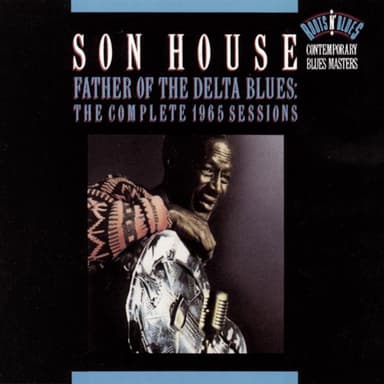
Son House recorded this in his rediscovery era, an old man summoning something from the depths of the Delta that should have been unreachable. The slide guitar moves in those irregular Delta patterns — lurching, insistent, occasionally terrifying — that don't sound like anyone else because they weren't learned from anyone else, they were developed from raw necessity and grief. The song proceeds as a kind of dream-narrative about receiving devastating news and then having to walk through a world that has fundamentally changed, the body continuing to move through familiar spaces that no longer mean what they meant before. House's voice here is one of the most extraordinary sounds in American music — cracked and enormous, with a vibrato that comes from somewhere below technique, from some physical register of devastation. He seems at moments to be singing to the dead, or to death itself, or to some indifferent force that has taken everything and asks nothing in return. The rhythm is hypnotic and slightly irregular, as if the song is too large to contain itself within a steady meter. This is not background music — it demands attention, discomfort, and a willingness to sit with the kind of grief that doesn't soften or resolve. It belongs to late nights alone, or to the study of American musical roots, or to the moment when you need music that doesn't lie about what loss actually weighs.
slow
1960s
raw, haunting, desolate
Delta Blues, Mississippi
Blues, Delta Blues. Slide Blues.
grief-stricken, desolate. Begins with devastation and walks slowly through a changed world, never offering relief, only the testimony of surviving an unsurvivable loss..
energy 4. slow. danceability 1. valence 1.
vocals: cracked male, enormous range, raw vibrato from deep grief, beyond technique.
production: acoustic slide guitar, sparse arrangement, minimal recording, organic decay.
texture: raw, haunting, desolate. acousticness 9.
era: 1960s. Delta Blues, Mississippi.
Late night completely alone when you need music that doesn't lie about what loss actually weighs.