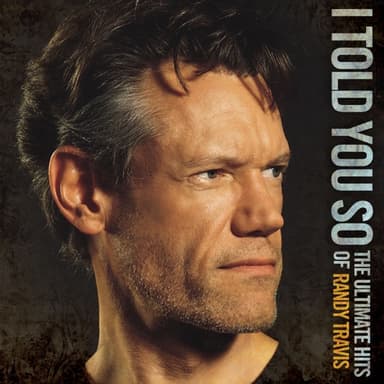
On the Other Hand
Randy Travis
The song operates as a drama compressed into three minutes, with Travis inhabiting a man whose good intentions are at war with his desires. The arrangement is traditional — clean acoustic guitar, a steady walking rhythm, steel guitar threading through the spaces — and this restraint is what makes the moral tension feel real rather than theatrical. Travis's baritone carries both possibilities simultaneously: he sounds capable of both the betrayal and the fidelity. The lyrical architecture turns on a repeated image, a physical reminder worn on the hand, that functions the way a conscience does — not dramatically, but insistently. The emotional landscape is one of ordinary human temptation, the kind that doesn't announce itself as dramatic until you're already in it. What distinguishes this from other country songs about faithfulness is its honesty about the pull of the alternative; it doesn't pretend the right choice is the easy one. The production is polished without being slick, firmly rooted in the early-90s neo-traditional country movement that Travis helped define. You reach for this song when you want country music that trusts its audience to sit with ambiguity, that doesn't resolve moral complexity into either condemnation or excuse, but simply holds it up to the light and lets you look.
medium
1980s
warm, clean, understated
Southern American neo-traditional country
Country. Neo-traditional country.
conflicted, tender. Builds tension between desire and fidelity across its verses, resolving toward moral clarity without erasing the pull of the alternative..
energy 4. medium. danceability 4. valence 5.
vocals: deep baritone, controlled, emotionally layered, restrained.
production: acoustic guitar, steel guitar, walking rhythm section, clean, traditional.
texture: warm, clean, understated. acousticness 7.
era: 1980s. Southern American neo-traditional country.
Quiet evening alone when you want country music that trusts you to sit with moral ambiguity rather than resolve it neatly.