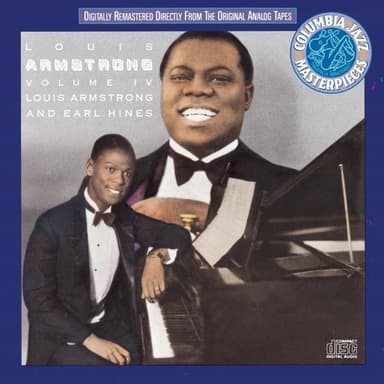
West End Blues
Louis Armstrong
This is perhaps the most important jazz recording ever made, which is a claim that can be supported technically and historically. What Armstrong does on this track in 1928 is announce the possibilities of jazz improvisation with a clarity and confidence that had simply not existed before. The opening horn cadenza is a statement of intent: I am going to do something no one has done, and I am going to make it sound inevitable. The band behind him is excellent but they are also clearly in the presence of something they did not fully expect, and that slight asymmetry — a soloist operating at a different altitude than the ensemble — becomes part of the texture of the recording. His piano interlude is surprising, tender, less harmonically sophisticated than his horn work but exactly right in context. The closing passage, where he climbs into the upper register and holds, is still thrilling after nearly a century. This is a record for listening carefully, not passively — it rewards attention, rewards knowing where to listen, rewards understanding what was possible in 1928 and what suddenly was not.
medium
1920s
raw, crackling, electric
American jazz, Chicago/New Orleans
Jazz. Classic Jazz / Hot Jazz.
ambitious, triumphant. Opens with a historic declaration of virtuosity and builds to a sustained climax that still feels shocking decades later..
energy 7. medium. danceability 3. valence 7.
vocals: no primary vocal, instrumental showcase with brief scat.
production: trumpet lead, ensemble jazz band, 1920s recording fidelity.
texture: raw, crackling, electric. acousticness 9.
era: 1920s. American jazz, Chicago/New Orleans.
Listening with full attention — headphones, no distractions — when you want to understand what music can actually do.