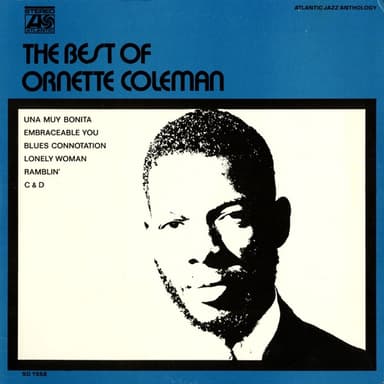
Blues Connotation
Ornette Coleman
The air feels scraped clean in this track — the alto saxophone careens through a blues framework like someone insisting on a conversation that no one else quite knows how to finish. The rhythm section holds a loose, rolling pulse beneath, but Coleman bends and wearies the blues form until it's something barely recognizable yet deeply felt. There's no piano in the mix, which strips the harmony down to its bones, letting the saxophone wander into harmonic territory that feels wrong and right simultaneously. It evokes a kind of earnest urgency, a man muttering something true at high speed. The blues is the ancestral structure here, but Coleman treats it like a starting point rather than a destination — the message is delivered slant, the emotion arriving not through resolution but through perpetual, productive tension. You'd reach for this at the tail end of a long evening, when clarity and confusion have become indistinguishable, when you want music that feels alive with questions rather than satisfied with answers.
medium
1950s
raw, open, tense
American, African-American blues and avant-garde jazz tradition
Jazz, Free Jazz. Avant-Garde Blues.
tense, searching. Opens with restless urgency and sustains productive tension throughout, never resolving but arriving somewhere felt rather than logically understood..
energy 6. medium. danceability 3. valence 4.
vocals: instrumental only, no vocals.
production: alto saxophone, bass, drums, no piano, harmonically bare.
texture: raw, open, tense. acousticness 8.
era: 1950s. American, African-American blues and avant-garde jazz tradition.
The tail end of a long evening when clarity and confusion have become indistinguishable and you want music alive with unresolved questions.