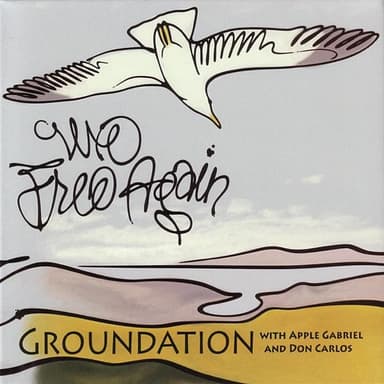
We Free Again
Groundation
The weight arrives before the first vocal — a bass tone so deep it seems to come from somewhere underground, supported by hand percussion that moves in slow, deliberate patterns borrowed from Nyahbinghi roots traditions. Groundation operates in a register that most contemporary reggae doesn't attempt: genuinely spiritual, unhurried to the point of being almost ritualistic, with an ensemble arrangement that layers saxophone, piano, and harmonizing voices into something that feels less like a band and more like a congregation. Harrison Stafford's lead vocal has the worn authority of someone who has been carrying this message for a long time — not performing urgency but embodying it, the difference between a preacher and an actor. The lyrical territory is liberation theology filtered through Rastafarian consciousness: the idea that freedom is not granted but reclaimed, spiritually and collectively. Groundation came out of Sonoma County, California, trained musicians who approached reggae with jazz-school rigor but Rasta conviction — an unusual combination that gives their music unusual depth. This track doesn't ask you to dance; it asks you to sit still and feel the full meaning of what's being said. It belongs to late evenings, incense burning, when the ambient noise of the day has finally gone quiet enough for something this serious to land. Not music for background — music that requires and rewards your full presence.
very slow
2000s
dense, deep, ritualistic
American (Sonoma County, California), Rastafarian and Jamaican spiritual roots tradition
Reggae, Roots Reggae. Nyahbinghi Spiritual Roots.
serene, melancholic. Begins in deep gravitational weight and moves slowly toward collective liberation, never fully releasing tension but accumulating spiritual resolve..
energy 3. very slow. danceability 2. valence 5.
vocals: worn male, authoritative, preacher-like, deliberate.
production: deep bass, Nyahbinghi hand percussion, saxophone, piano, layered harmonies.
texture: dense, deep, ritualistic. acousticness 5.
era: 2000s. American (Sonoma County, California), Rastafarian and Jamaican spiritual roots tradition.
Late evening with incense burning, after the ambient noise of the day has finally gone quiet enough for something this serious to land.