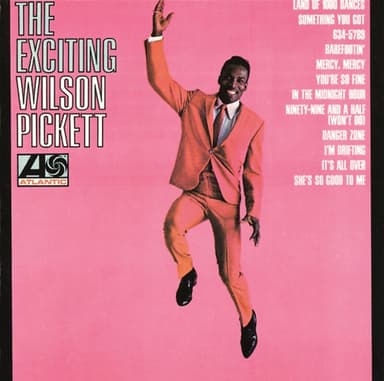
Land of 1000 Dances
Wilson Pickett
A locomotive built from human voices and percussive intention, "Land of 1000 Dances" is a song that doesn't seduce so much as commandeer. The opening is pure excitement — almost anarchic energy before the groove snaps into place and everyone locks in. Pickett's genius here is velocity: he attacks the phrases with the urgency of someone trying to get through as much living as possible before time runs out. The horn arrangement is celebratory and slightly chaotic, stacked voices creating a wall of organized noise. Each referenced dance is delivered like a benediction, a toast to a culture of movement and release that existed in specific Black American spaces — the church hall, the juke joint, the high school gymnasium. The production feels wonderfully crowded, every frequency occupied, no silence permitted. This isn't background music; it physically demands participation. The cultural context is crucial — this is a document of late '60s Black popular culture, a kind of index of communal joy expressed through dance. The song exists in the tradition of music as instruction, as communal script. You reach for it when you need to dislodge something stuck in your body — a bad week, a slow afternoon, the accumulated weight of being too responsible for too long.
fast
1960s
dense, bright, crowded
Black American soul, late 1960s juke joint and gymnasium tradition
Soul, R&B. Dance Soul.
euphoric, energetic. Erupts from near-anarchic excitement into a locked communal groove that sustains maximum celebratory energy without release or resolution..
energy 9. fast. danceability 10. valence 9.
vocals: urgent male, commanding, high-velocity delivery, physically demanding.
production: wall-of-sound horns, stacked voices, dense percussion, every frequency occupied.
texture: dense, bright, crowded. acousticness 2.
era: 1960s. Black American soul, late 1960s juke joint and gymnasium tradition.
When you need to physically dislodge something stuck in your body — a bad week, a slow afternoon, the accumulated weight of being too responsible for too long.