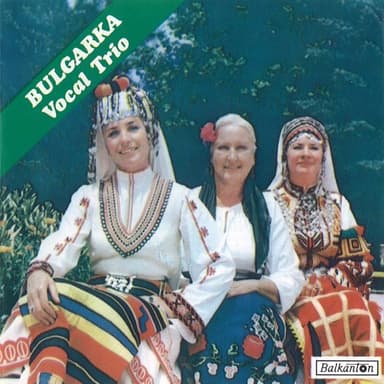
Pilentze Pee
Trio Bulgarka
Bulgarian folk singing operates by different physical laws than Western choral tradition. Where European classical choir training emphasizes blended tone and vowel uniformity, the Trio Bulgarka cultivate a chest-dominant, open-throated production that gives each voice its own hard-edged presence, bright and almost ceramic in quality. The harmony they construct in "Pilentze Pee" uses intervals that Western ears initially register as dissonance — seconds and minor seconds stacked against each other — but this misnames what's actually happening: these aren't wrong notes but a different modal system entirely, one that predates the equal temperament that Western music eventually standardized around. The rhythm is asymmetric, built in 7/8 or 11/8 groupings that create a limping, lurching forward motion, dance-inducing but in a way that forces a different relationship with time than a 4/4 pulse would. The text describes a bird singing — simple, pastoral subject matter elevated to something almost alarming in its sonic intensity. The overall effect is not pretty in any conventional sense; it's powerful, slightly unnerving, completely alive. First-time listeners often feel something they can't categorize: not discomfort exactly, but recognition of a tradition so old and self-sufficient that it needs nothing from you.
medium
1980s
bright, raw, ancient
Bulgarian folk tradition, Eastern Europe
Folk, World. Bulgarian folk.
intense, primal. Commands total attention from the first phrase and sustains an almost alarming power throughout, leaving the listener slightly transformed without offering comfort or resolution..
energy 7. medium. danceability 5. valence 5.
vocals: chest-dominant female trio, open-throated, ceramic brightness, dissonant stacked harmony.
production: a cappella, pure unaccompanied voice, no instruments.
texture: bright, raw, ancient. acousticness 10.
era: 1980s. Bulgarian folk tradition, Eastern Europe.
A completely quiet room where you have surrendered distraction and are willing to encounter a tradition entirely self-sufficient and older than modern ears.