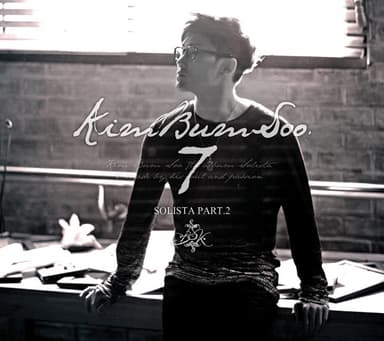
끝사랑
김범수
The title translates roughly to "final love," and the song carries that weight like luggage: heavy, familiar, necessary to bring along. The arrangement is classic mid-tempo Korean ballad — piano and strings built for feeling, a tempo that moves like a walk through somewhere you're leaving for the last time. Kim Bum-soo's voice here is mature in a specific way: not youthful urgency but the steadier ache of someone who knows what they're losing and is choosing to remember it clearly rather than look away. He doesn't push for dramatic effect — this is not a song about the explosion of loss but its slow, certain gravity. The melody has a quality of looking backward and forward simultaneously, honoring what was while acknowledging the finality of its ending. It's the sonic equivalent of keeping a letter you'll never send. Emotionally, this is a song for people who have already cried about something and arrived at the quieter, more permanent sadness on the other side of that. Not devastation but its aftermath — grief become part of the furniture of a life. It's well-suited for solitary Sunday mornings, for the kind of introspection that can only happen without distraction. Within the tradition of Korean love songs, it holds a dignified place: not the loudest or most celebrated, but among the truest.
slow
2000s
somber, dignified, measured
Korean pop music
Ballad, K-Pop. Korean Ballad.
melancholic, resigned. Moves with the slow certain gravity of final loss, bypassing explosive peaks to arrive at the quieter permanent sadness on the other side..
energy 3. slow. danceability 2. valence 2.
vocals: mature tenor, steady ache, restrained and dignified.
production: piano and strings, mid-tempo ballad architecture.
texture: somber, dignified, measured. acousticness 6.
era: 2000s. Korean pop music.
Solitary Sunday morning when grief has already done its loudest work and settled into furniture.