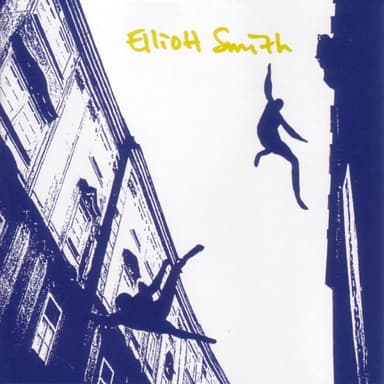
Needle in the Hay
Elliott Smith
Recorded onto a four-track with almost no production buffer between the performance and the listener, this song has the quality of something overheard rather than performed. The guitar is open-tuned and droning, a low persistent sound beneath the picking that creates a sense of unease before a single word is sung. There is no warmth in the production — deliberately so. The coldness is structural. Smith's voice has a flat, affectless quality here that reads less like detachment and more like someone past the point of performing emotion, simply describing events. The song is about heroin — about the needle itself, the particular clarity and obliteration it offers, the way it simplifies everything into a single urgent point. The imagery is physical and specific, never euphemistic, and that specificity is what makes it so hard to distance yourself from. It became widely known after its placement in Wes Anderson's The Royal Tenenbaums, used during a scene of attempted suicide, and that pairing felt less like a creative choice and more like an inevitability — the song was always about exactly that edge, that moment of being entirely overtaken by a single dark impulse. The lo-fi recording quality, which might seem like a limitation, is actually essential to what the song does: the rawness makes it feel immediate, unmediated, like you're hearing something that was never meant to be heard by anyone outside the room. You don't listen to this song casually. It finds you when you're ready for it, or not ready at all.
slow
1990s
raw, cold, unmediated
American indie folk, Portland underground
Folk, Indie. Lo-fi Folk.
desolate, haunting. Opens with uneasy drone and builds into flat, affectless resignation — emotion not performed but exhausted past the point of performance..
energy 2. slow. danceability 1. valence 1.
vocals: flat male, affectless, intimate, past-emotion delivery.
production: open-tuned acoustic guitar, lo-fi four-track, droning, minimal.
texture: raw, cold, unmediated. acousticness 10.
era: 1990s. American indie folk, Portland underground.
Alone at 3am in a dark room when the weight of something specific and unbearable refuses to lift.